



Did You Know
GHG Protocol Announces Key Standard Development
29-July-2026
On July 29, 2026, the Greenhouse Gas Protocol announced a series of updates related to its corporate standards as it continues to strengthen its governance, leadership, and institutional capacity to meet growing global demand for trusted, interoperable greenhouse gas accounting standards.
View More
On July 29, 2026, the Greenhouse Gas Protocol announced a series of updates related to its corporate standards as it continues to strengthen its governance, leadership, and institutional capacity to meet growing global demand for trusted, interoperable greenhouse gas accounting standards.
How the EU's CBAM will impact the carbon pricing
15-December-2025
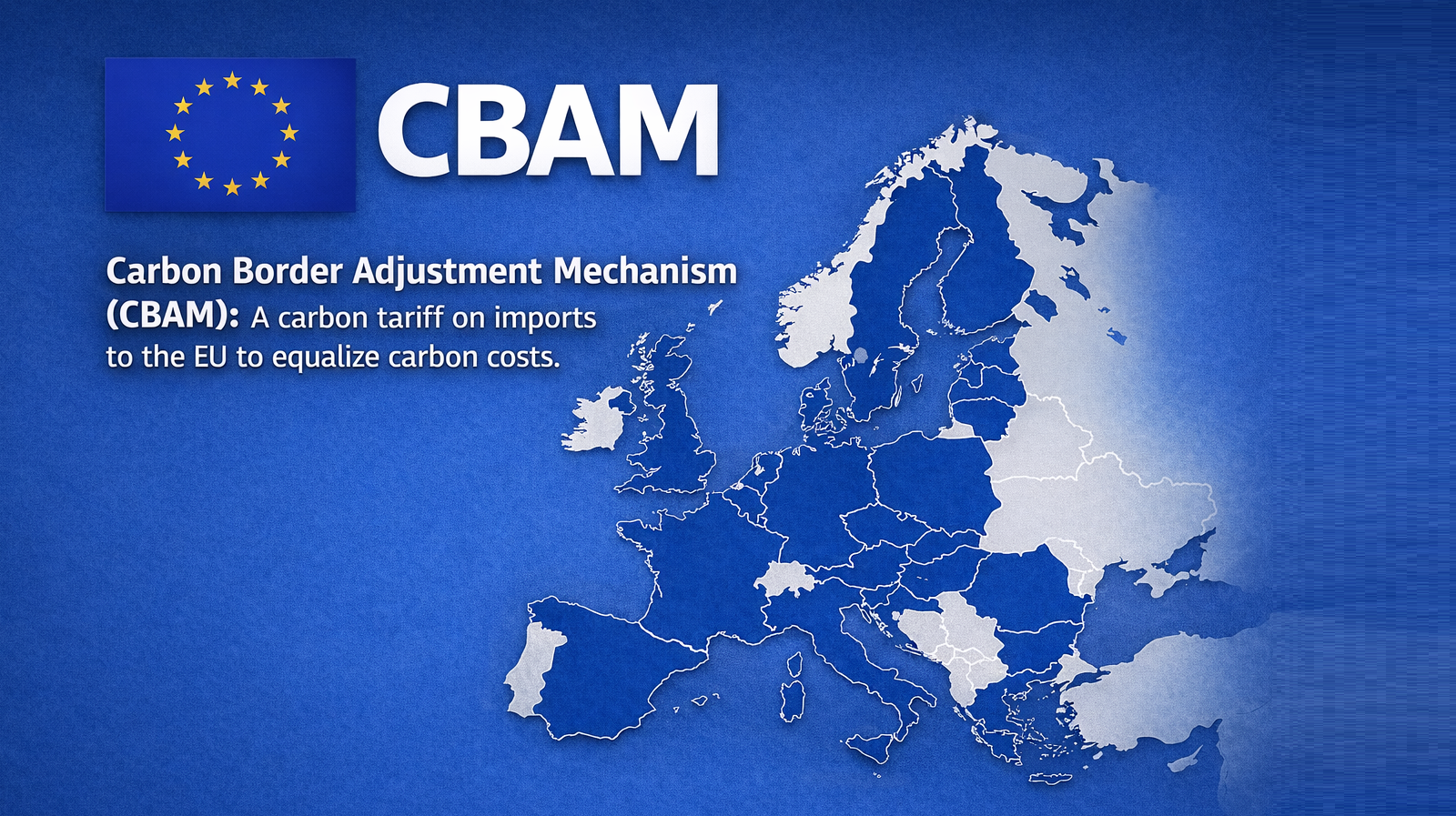
The European Union’s Carbon Border Adjustment Mechanism (CBAM) enters its definitive stage on 1 January 2026, becoming the first fully operational border carbon adjustment (BCA) policy to begin charging costs based on the emissions intensity of imported goods.
View More
The European Union’s Carbon Border Adjustment Mechanism (CBAM) enters its definitive stage on 1 January 2026, becoming the first fully operational border carbon adjustment (BCA) policy to begin charging costs based on the emissions intensity of imported goods.
Federal Decree On the Reduction of Climate Change
30-May-2025
UAE Federal Law 11 of 2024 establishes a mandatory climate regulatory framework for businesses operating in the UAE. It requires companies—across all sectors and free zones—to measure, report, and reduce their greenhouse gas (GHG) emissions in support of the UAE’s net-zero by 2050 goal. The law introduces a strict emissions monitoring, reporting, and verification (MRV) system and sets clear compliance obligations, with significant penalties for non-compliance, including fines up to AED 2 million.
For businesses, this means increased accountability on carbon emissions, greater transparency in sustainability reporting, and a push to adopt cleaner technologies and climate-friendly practices. The law creates new operational and strategic requirements but also opens opportunities for innovation, cost savings through energy efficiency, and alignment with international climate standards, enhancing competitiveness in global markets.
View More
UAE Federal Law 11 of 2024 establishes a mandatory climate regulatory framework for businesses operating in the UAE. It requires companies—across all sectors and free zones—to measure, report, and reduce their greenhouse gas (GHG) emissions in support of the UAE’s net-zero by 2050 goal. The law introduces a strict emissions monitoring, reporting, and verification (MRV) system and sets clear compliance obligations, with significant penalties for non-compliance, including fines up to AED 2 million.
For businesses, this means increased accountability on carbon emissions, greater transparency in sustainability reporting, and a push to adopt cleaner technologies and climate-friendly practices. The law creates new operational and strategic requirements but also opens opportunities for innovation, cost savings through energy efficiency, and alignment with international climate standards, enhancing competitiveness in global markets.

Decisions from Dubai: A review of COP28 outcomes
14-December-2023
A just 1.5°C transition away from fossil fuels, climate finance and nature at the heart of first Global Stocktake outcome alongside Global Goal on Adaptation and Loss and Damage Fund.
The COP28 outcome made it clearer than ever that we must transition away from fossil fuels in a just and equitable manner. It also underscored the importance of the global goal on adaptation in strengthening resilience and reducing vulnerability to climate change, as well as the vital importance to protect and restore nature. The need for enhanced support and finance for developing countries was flagged as a critical enabler of climate action.
The COP28 decisions set out a to-do list for Parties and partners to work together to achieve deep, rapid and sustained reductions in greenhouse gas emissions in line with 1.5 °C pathways, making an explicit reference for the first time to the need to reduce 43% of GHG emissions by 2030 and 60% by 2035 relative to the 2019 level.
View More
A just 1.5°C transition away from fossil fuels, climate finance and nature at the heart of first Global Stocktake outcome alongside Global Goal on Adaptation and Loss and Damage Fund.
The COP28 outcome made it clearer than ever that we must transition away from fossil fuels in a just and equitable manner. It also underscored the importance of the global goal on adaptation in strengthening resilience and reducing vulnerability to climate change, as well as the vital importance to protect and restore nature. The need for enhanced support and finance for developing countries was flagged as a critical enabler of climate action.
The COP28 decisions set out a to-do list for Parties and partners to work together to achieve deep, rapid and sustained reductions in greenhouse gas emissions in line with 1.5 °C pathways, making an explicit reference for the first time to the need to reduce 43% of GHG emissions by 2030 and 60% by 2035 relative to the 2019 level.

It’s ‘Now or Never’ to Limit Global Warming
04-April-2022
A new flagship UN report on climate change out Monday indicating that harmful carbon emissions from 2010-2019 have never been higher in human history, is proof that the world is on a “fast track” to disaster, António Guterres has warned, with scientists arguing that it’s ‘now or never’ to limit global warming to 1.5 degrees.
View More
A new flagship UN report on climate change out Monday indicating that harmful carbon emissions from 2010-2019 have never been higher in human history, is proof that the world is on a “fast track” to disaster, António Guterres has warned, with scientists arguing that it’s ‘now or never’ to limit global warming to 1.5 degrees.
Turn off your Zoom Video and Help the Planet
01-June-2021
A new study conducted by researchers at Purdue, Yale, and MIT has found that one hour of video conferencing emits up to 1 kilogram of carbon dioxide, uses up to 12 liters (3.2 gallons) of water, and requires a piece of land the size of an iPad Mini.
View More
A new study conducted by researchers at Purdue, Yale, and MIT has found that one hour of video conferencing emits up to 1 kilogram of carbon dioxide, uses up to 12 liters (3.2 gallons) of water, and requires a piece of land the size of an iPad Mini.
Banks Produce 700 Times More Emissions From Loans
28-April-2021
Banks Produce 700 Times More Emissions From Loans Than Offices. The greenhouse gas emissions associated with financial institutions’ investing, lending and underwriting activities are more than 700 times higher, on average, than their direct emissions, according to a report published Wednesday by climate nonprofit CDP.
View More
Banks Produce 700 Times More Emissions From Loans Than Offices. The greenhouse gas emissions associated with financial institutions’ investing, lending and underwriting activities are more than 700 times higher, on average, than their direct emissions, according to a report published Wednesday by climate nonprofit CDP.
The Global Healthcare Climate Footprint
07-April-2021
The global healthcare climate footprint is equivalent to the greenhouse gas emissions from 514 coal-fired power plants.
View More
The global healthcare climate footprint is equivalent to the greenhouse gas emissions from 514 coal-fired power plants.
The Corporate GHG Standard
01-March-2021
What do you need to report on as per the corporate GHG Standard developed by the GHG Protocol requirement? The standard covers the accounting and reporting of seven greenhouse gases covered by the Kyoto Protocol – carbon dioxide (CO2), methane (CH4), nitrous oxide (N2O), hydrofluorocarbons (HFCs), perfluorocarbons (PCFs), sulphur hexafluoride (SF6) and nitrogen trifluoride (NF3). It was updated in 2015 with the Scope 2 Guidance, which allows companies to credibly measure and report emissions from purchased or acquired electricity, steam, heat, and cooling.
View More
What do you need to report on as per the corporate GHG Standard developed by the GHG Protocol requirement? The standard covers the accounting and reporting of seven greenhouse gases covered by the Kyoto Protocol – carbon dioxide (CO2), methane (CH4), nitrous oxide (N2O), hydrofluorocarbons (HFCs), perfluorocarbons (PCFs), sulphur hexafluoride (SF6) and nitrogen trifluoride (NF3). It was updated in 2015 with the Scope 2 Guidance, which allows companies to credibly measure and report emissions from purchased or acquired electricity, steam, heat, and cooling.